How to Aggregate & Track Multiple DeFi Wallets
By Cropr AdminManaging DeFi assets across chains isn’t just a technical challenge anymore; it’s a visibility problem. With each new wallet, chain, or protocol, the chances of losing sight of your complete financial picture grow. Tracking your holdings manually across MetaMask, Coinbase Wallet, Trust Wallet, and a few custom addresses on Arbitrum or Base? That’s not just inefficient, it’s risky.
Here’s a structured view of how to approach this problem, what tools to use, and what to expect from a reliable multi‑chain wallet aggregator.
The Visibility Problem in DeFi
Most DeFi users begin with one wallet, on Ethereum. Soon, they will add another protocol on Avalanche or Solana to test it. Fast forward a few months, and there’s capital sitting across five wallets on six chains: swaps, staked tokens, LP positions, unclaimed airdrops, and debt positions. The fragmentation is real.
The core problem here isn’t the assets. It’s the lack of consolidated insight. Without a unified view of your holdings, you’re working with blind spots. That creates inefficiencies, duplicate exposure, and even forgotten positions that quietly depreciate.
What Is a Multi‑Chain Wallet Aggregator?
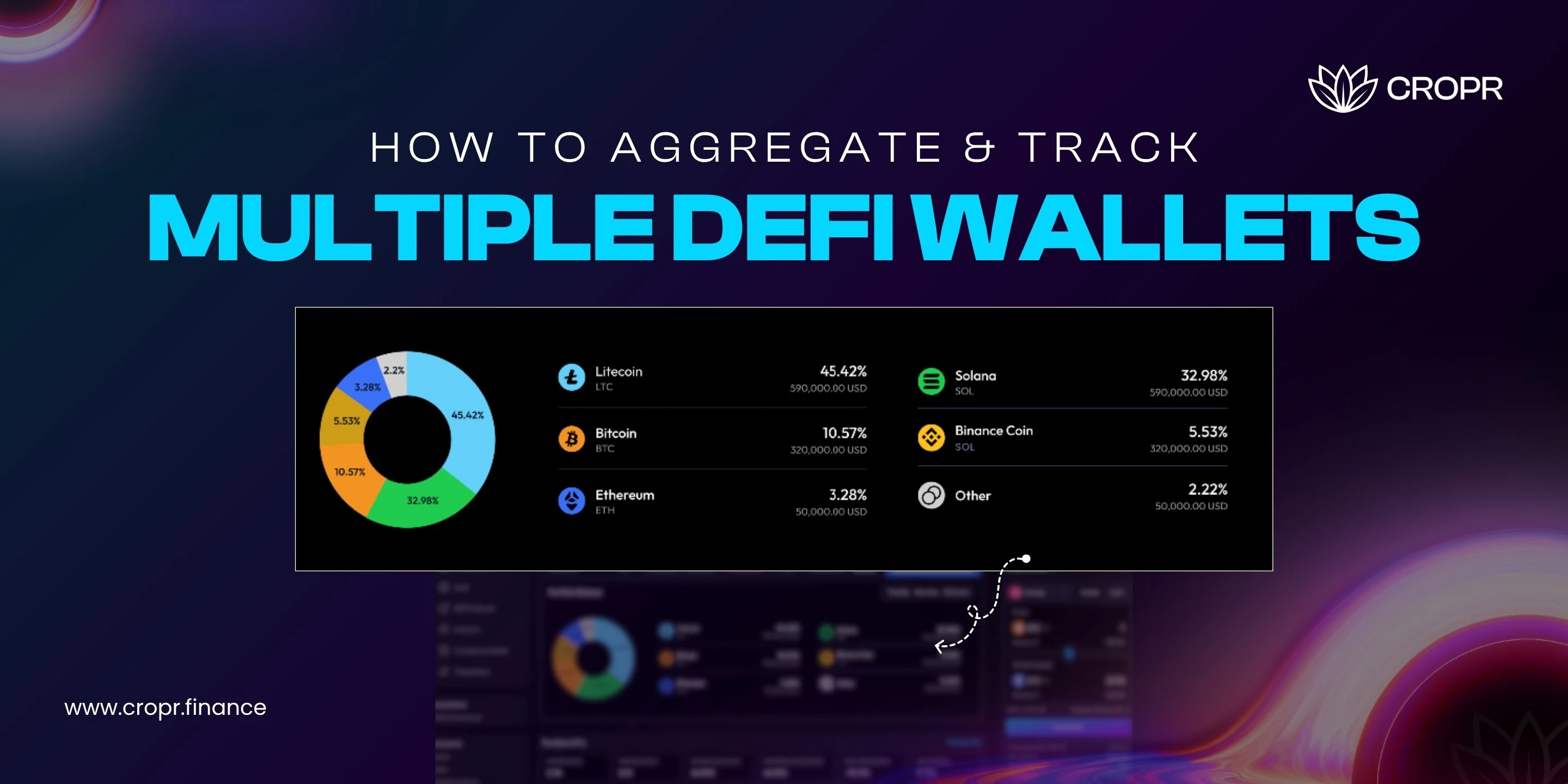
A multi‑chain wallet aggregator is a dashboard that connects to various wallets and protocols across multiple chains, pulling all your data into one interface. It doesn’t move your funds, nor does it require you to custody anything with them. It simply reads data safely via APIs, smart contracts, or blockchain explorers.
A good aggregator shows:
- Your total portfolio value across chains
- Token balances per wallet
- Protocol-level positions (like lending, staking, LPs)
- NFT holdings, if relevant
- Historical charts and performance metrics
It reduces dependence on manual record-keeping or toggling between multiple dApps.
Connecting Crypto Wallets: What It Involves
To connect crypto wallets, most platforms follow a few secure steps:
- You either paste public addresses or connect via WalletConnect, MetaMask, or browser extensions.
- The aggregator reads your wallet data (read-only) without needing private keys.
- It queries each supported blockchain and protocol to retrieve balances and position data.
- The data is displayed in a single UI, sometimes with CSV exports or tax-ready formats.
This is not just a convenience layer; it’s becoming essential for traders, liquidity providers, and even casual DeFi users with small, diversified positions.
Tools That Help Track DeFi Portfolios
Several DeFi portfolio tracker tools support multi-wallet, multi-chain aggregation. Some are paid, some are free, and they vary widely in coverage and accuracy.
Leading options include:
- CROPR: Designed for serious DeFi users who want real-time visibility across multiple wallets and chains. CROPR offers a unified view of your entire crypto portfolio, supports cross-chain tracking, and connects securely to multiple wallets with read-only access. Its interface is purpose-built for performance-focused users who value clarity, precision, and responsiveness.
- Zapper: Connects multiple wallets and shows DeFi positions in real-time.
- DeBank: Lightweight and mobile-friendly, with DeFi and token tracking across many chains.
- Rotki: A privacy-focused portfolio tracker that runs locally.
- Revoke.cash (read-only mode): Not a full aggregator, but great for scanning contract approvals while viewing balances.
Each of these supports wallet aggregation, but not all support every chain. Ethereum, BNB Chain, Polygon, Arbitrum, and Optimism are usually well covered. Beyond that, things get inconsistent.
Why Accuracy Across Chains Matters
Aggregators that don’t decode smart contracts properly or fail to track protocol-specific wrappers like aTokens or cTokens often underreport your holdings. Worse, they might overestimate value if they don’t account for price slippage or protocol debt.
Accuracy matters because:
- You may think your portfolio is worth more or less than it actually is.
- You might miss liquidation thresholds if debt is not tracked in lending protocols.
- Unclaimed rewards or pending vesting tokens could go unnoticed.
Before relying on any tracker, test it with one wallet and cross-verify balances with the native dApp or block explorer.
Common Mistakes to Avoid
- Over-relying on UI numbers
Some dashboards don’t refresh frequently. Double-check values during volatile market conditions.
- Connecting wallets with full permissions
Always use read-only connections. Never share private keys or seed phrases.
- Assuming full coverage
Check if your specific DeFi protocols are supported. Many aggregators still miss smaller vaults or experimental yield strategies.
- Ignoring historical data
Understanding how your positions have performed over time is key, not just where they are today.
Security Considerations
Even though most aggregators only require read access, always confirm the platform’s credibility:
- Does the project have open documentation?
- Is it backed by a well-known team or company?
- Are wallet connections handled via WalletConnect or a browser extension?
- Is there an option to revoke access or delete data?
Avoid tools that ask for write-access or custody of your tokens unless you're explicitly executing trades or swaps from within the interface, and even then, caution is advised.
How Advanced Users Are Using Aggregators
Some DeFi traders use these dashboards not just for tracking, but for:
- Creating on-chain reports for DAO treasury management
- Monitoring whale movements across tagged wallets
- Analyzing wallet behavior to inform trading decisions
- Keeping an eye on impermanent loss across LP positions
- Preparing for tax season with pre-exported CSVs
So, while the front-end may look like a simple chart or balance viewer, the backend data, when parsed right, can give you operational clarity.
Final Thoughts
If you’re in DeFi and actively managing wallets across chains, working without a reliable aggregator is like trading with one eye closed. Visibility isn’t optional anymore; it’s foundational.
CROPR was built to solve exactly this problem. It helps you connect multiple wallets, track your DeFi activity across supported chains, and maintain an accurate view of your overall holdings. Whether you’re chasing yields, farming incentives, or simply trying to stay organized, CROPR simplifies your view so you can focus on strategy instead of logistics.
We’re constantly improving our support for new chains, protocols, and features. Your feedback helps shape that progress. If you’re looking for a wallet aggregator that’s fast, intuitive, and DeFi-native, start with CROPR.
Try it today. See your entire crypto portfolio in one place.

